Meeting Eco-bot
Blog post description.
ECO-BOTS ADVENTURES
Meeting Eco‑Bot: The Little Guardian of Brightleaf (and Why Kids Love Them)
There are some characters you meet once and never quite forget — not because they shout the loudest, or sparkle the brightest, but because they notice things. The small things. The overlooked things. The “that shouldn’t be there” things.
Eco‑Bot is that kind of character.
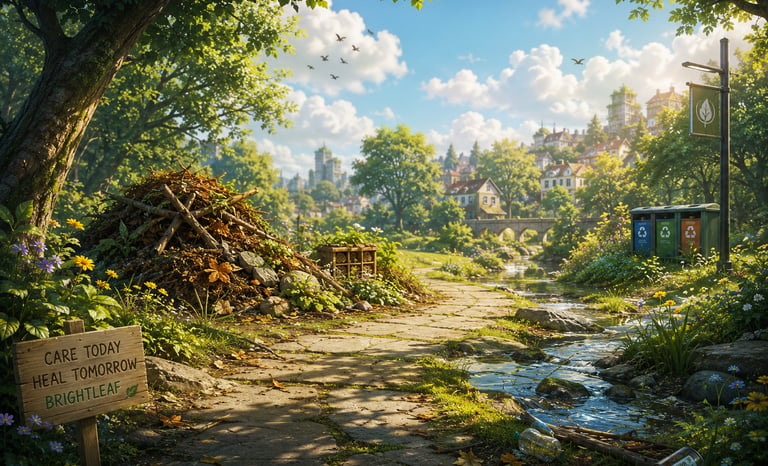
In the world of Brightleaf (a place that looks a lot like ours, only a touch more colourful and a smidge more magical), Eco‑Bots wander parks, streets, and gardens with one simple purpose: putting the world back in the right places. A crisp packet isn’t meant to nap in a hedge. A plastic bottle doesn’t belong in a stream. A pile of autumn leaves shouldn’t be sealed inside a bin forever when it could be feeding the soil.
Eco‑Bot doesn’t deliver lectures. Eco‑Bot delivers action.
So… what is Eco‑Bot?
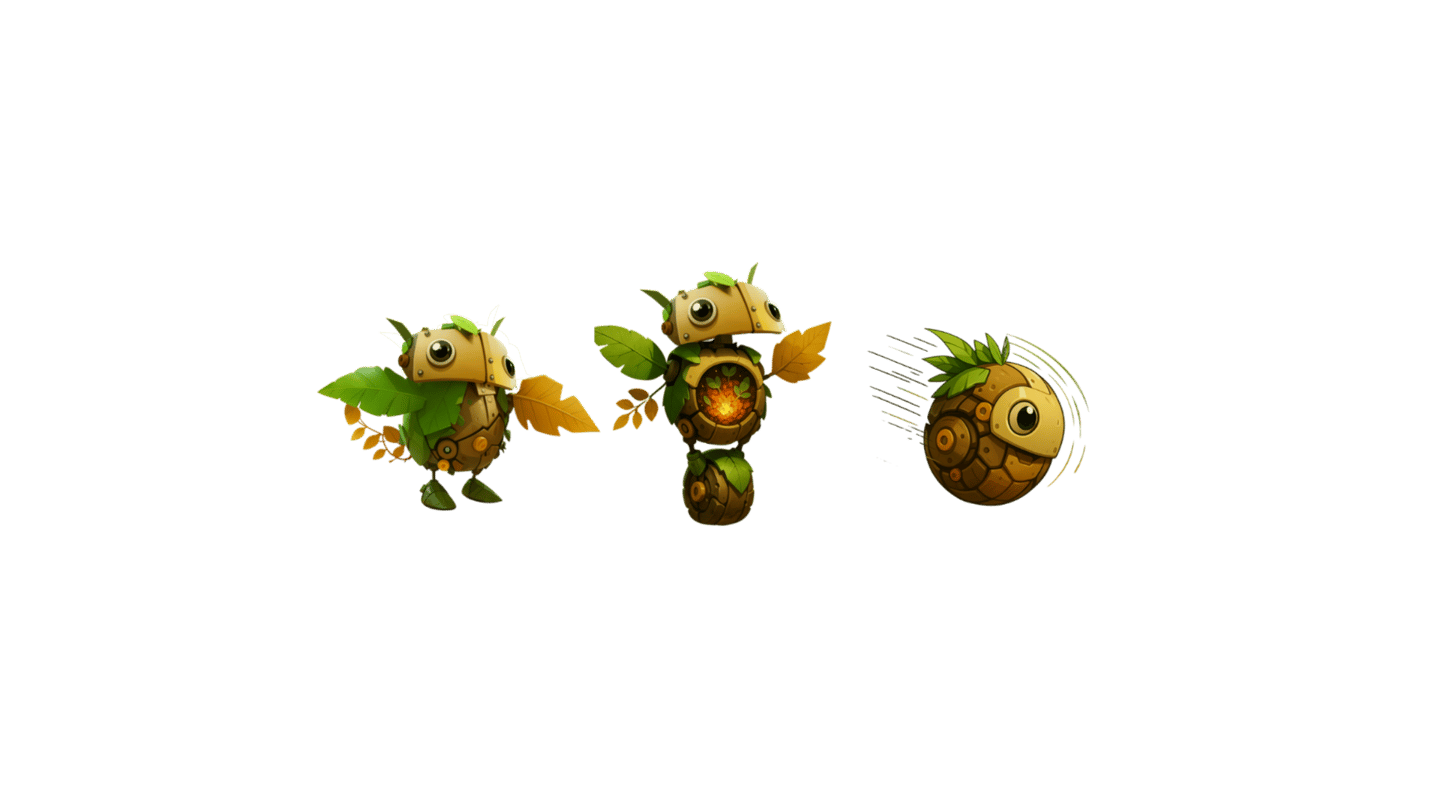
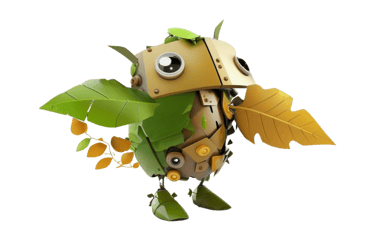
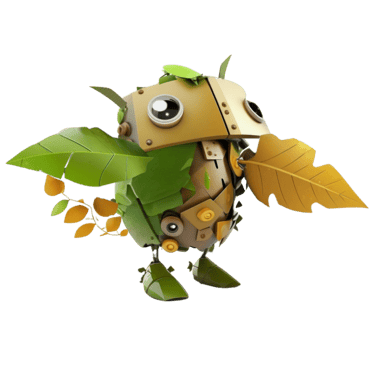
Eco‑Bot isn’t just one robot. Eco‑Bots are a whole species — each with their own patch of town to care for, their own routines, and their own quirky ways of doing things. They’re not shiny metal machines that beep and boss you around.
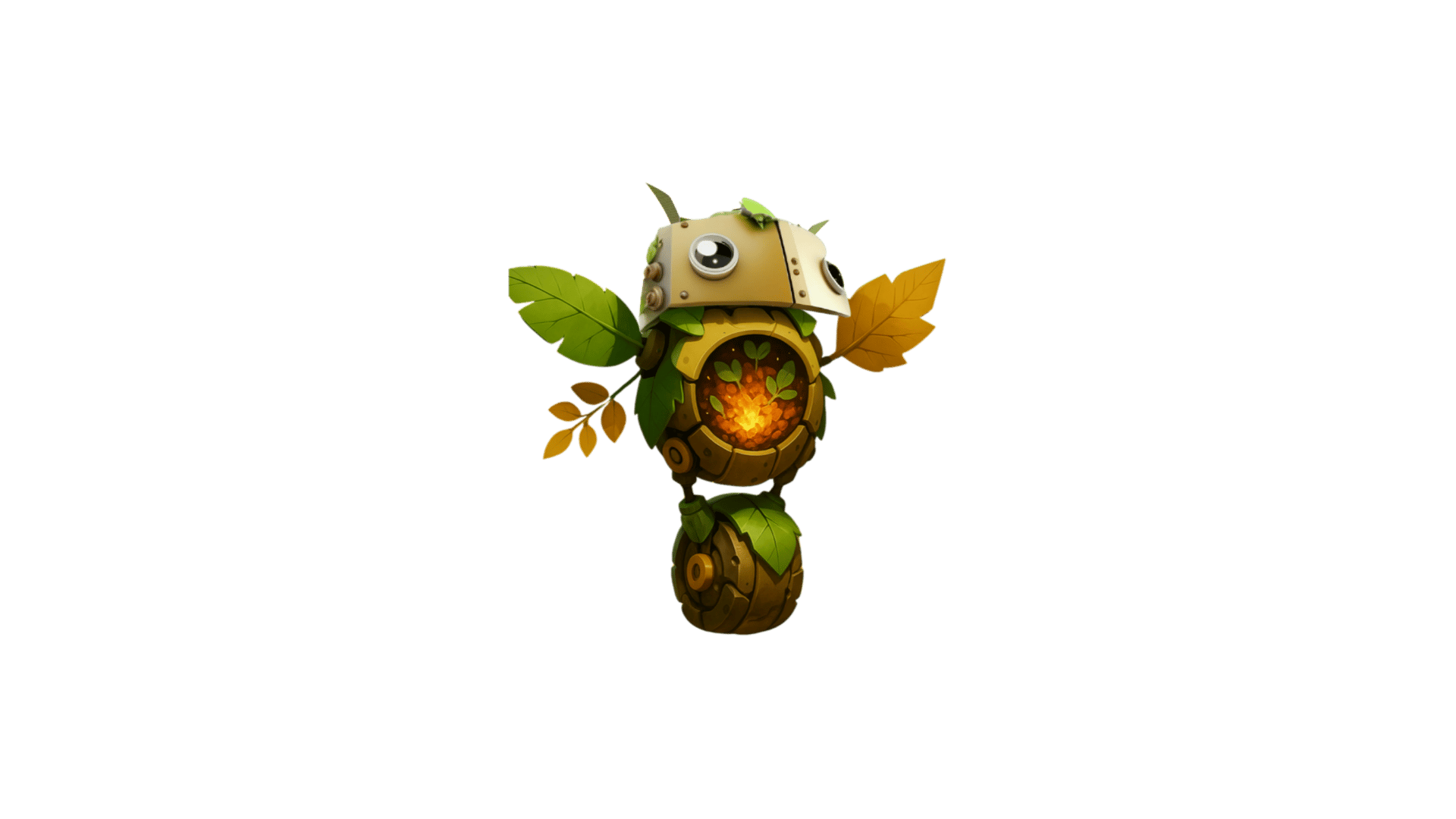
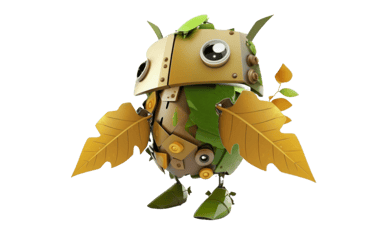
They’re something stranger (and lovelier): biological‑mechanical creatures.
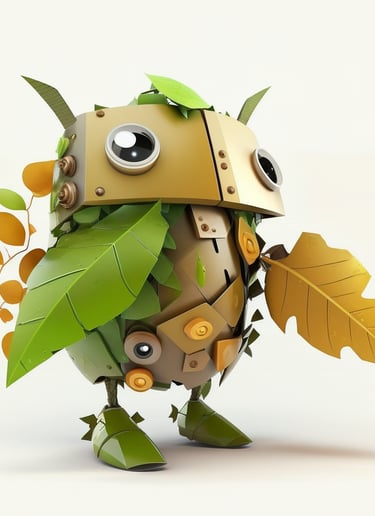
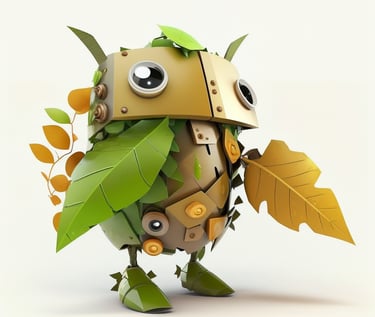
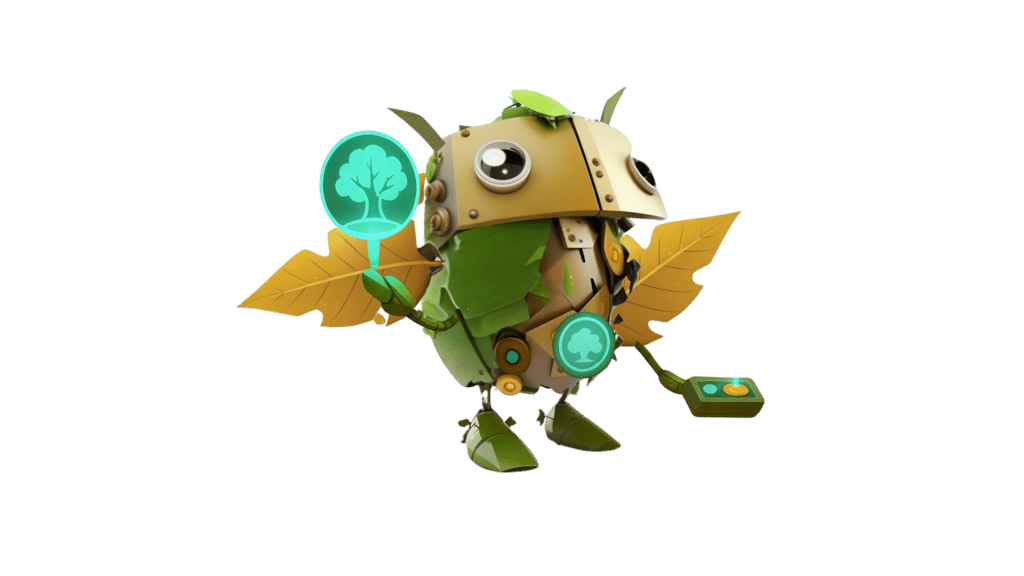
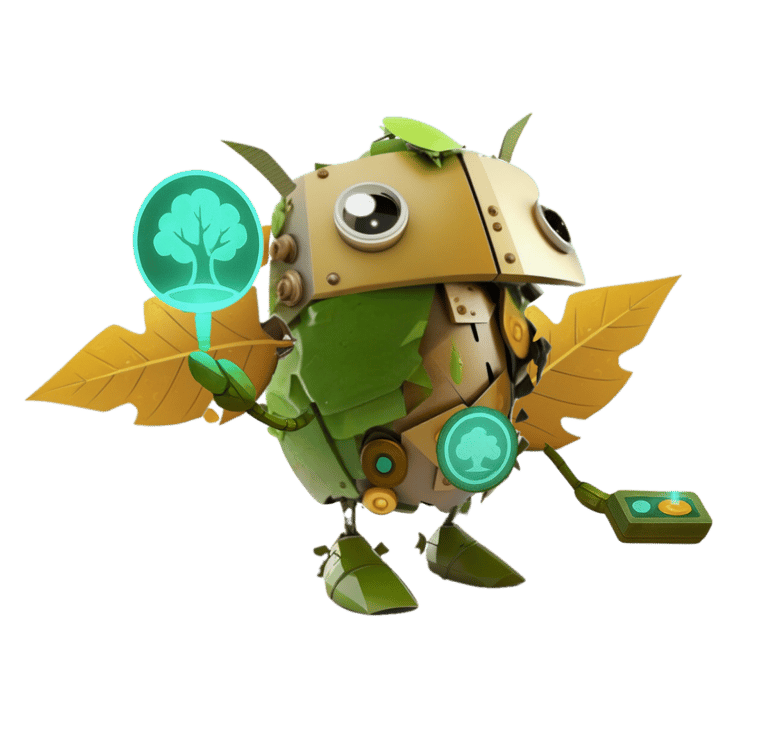
They have leaf‑armour and expressive eyes. They move with a purposeful wobble — like a determined little gardener with a mission. And in their chest, they carry the warm, glowing heart of what makes them truly special…
The glowing heart: the Biomeiler Core
Inside every Eco‑Bot is a living engine called a Biomeiler Core.
It’s not powered by batteries or petrol or magical unicorn dust (sadly). It’s powered by something far more real — nature doing what nature does best: breaking things down.
Eco‑Bots “eat” the organic bits humans often ignore:
damp autumn leaves
weeds pulled from cracks in the pavement
plant matter
food scraps left behind with litter
All of that feeds the microbial life inside the core. As it decomposes, it produces heat — a steady warmth that circulates through Eco‑Bot like a cosy internal hot‑water system. And that’s why Eco‑Bot’s chest glows amber when they’re healthy and well‑fed.
It’s a simple visual language that children instantly understand:
Bright glow = Eco‑Bot is thriving.
Dim glow = something’s not right.
No long explanation needed. Just a feeling in your tummy that makes you want to help.
What Eco‑Bot eats (and what they don’t)
Eco‑Bots will collect plastic, metal, and other rubbish — but it doesn’t power them. They sort it carefully, because it belongs somewhere else… but it isn’t food.
And that’s part of what makes Eco‑Bot so endearing: they don’t treat litter like a game. They treat it like work. Necessary work. Important work.
But offer an Eco‑Bot a rich pile of damp leaves, and you’ll see a level of delight that can only be described as:
“Compost‑excited.”
A day in the life of Eco‑Bot
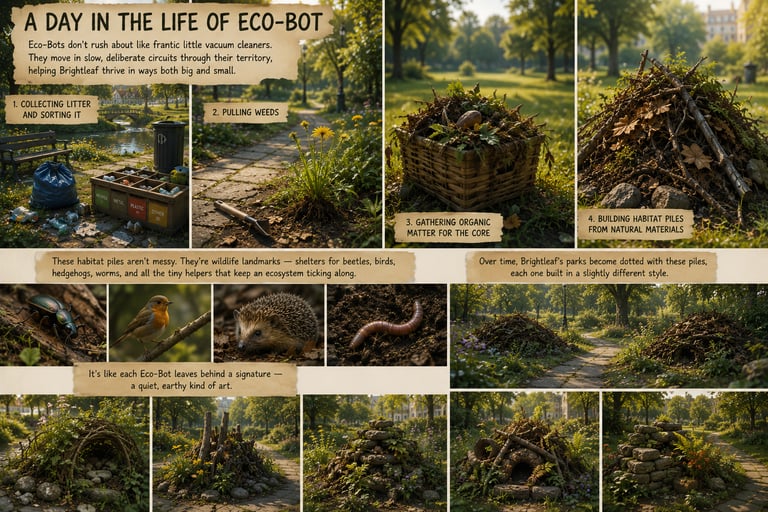
Eco‑Bots don’t rush about like frantic little vacuum cleaners.
They move in slow, deliberate circuits through their territory:
collecting litter and sorting it
pulling weeds
gathering organic matter for their core
building habitat piles from sticks, leaves, and garden leftovers
These habitat piles aren’t messy. They’re wildlife landmarks — shelters for beetles, birds, hedgehogs, worms, and all the tiny helpers that keep an ecosystem ticking along.
Over time, Brightleaf’s parks become dotted with these piles, each one built in a slightly different style depending on which Eco‑Bot tends that area. It’s like each Eco‑Bot leaves behind a signature — a quiet, earthy kind of art.
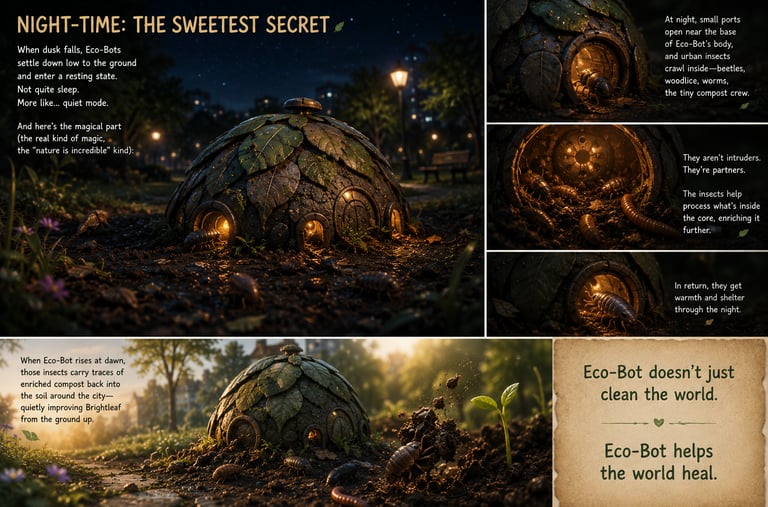
Night-time: the sweetest secret
When dusk falls, Eco‑Bots settle down low to the ground and enter a resting state. Not quite sleep. More like… quiet mode.
And here’s the magical part (the real kind of magic, the “nature is incredible” kind):
At night, small ports open near the base of Eco‑Bot’s body, and urban insects crawl inside — beetles, woodlice, worms, the tiny compost crew. They aren’t intruders. They’re partners.
The insects help process what’s inside the core, enriching it further. In return, they get warmth and shelter through the night. When Eco‑Bot rises at dawn, those insects carry traces of enriched compost back into the soil around the city — quietly improving Brightleaf from the ground up.
Eco‑Bot doesn’t just clean the world.
Eco‑Bot helps the world heal.
Why “meeting Eco‑Bot” matters
When children meet Eco‑Bot, they aren’t meeting a perfect hero who does everything alone. They’re meeting a companion who makes them feel capable.
Eco‑Bot’s stories are built on a simple truth:
Small actions add up.
Picking up one piece of litter can be the start of an adventure. Pulling one weed can make room for new life. Making a habitat pile can create a home for something living.
Eco‑Bot doesn’t say, “You must save the planet.”
Eco‑Bot says, in a warm, glowing way:
“Come on. Let’s fix this bit together.”
Eco‑Bot’s promise (without the preaching)
The Eco‑Bot world is designed to be hopeful. Not naïve — hopeful.
It acknowledges that the world accumulates things in the wrong places. But it also insists that children have power — not the kind that comes from shouting at grown-ups, but the kind that comes from noticing, caring, and doing.
And if that sounds like a big message for a small reader…
Well, Eco‑Bot has small hands (or… little grabby leaf‑claws), and that’s exactly the point.
Contact us
Socials
Subscribe to our mailing list.